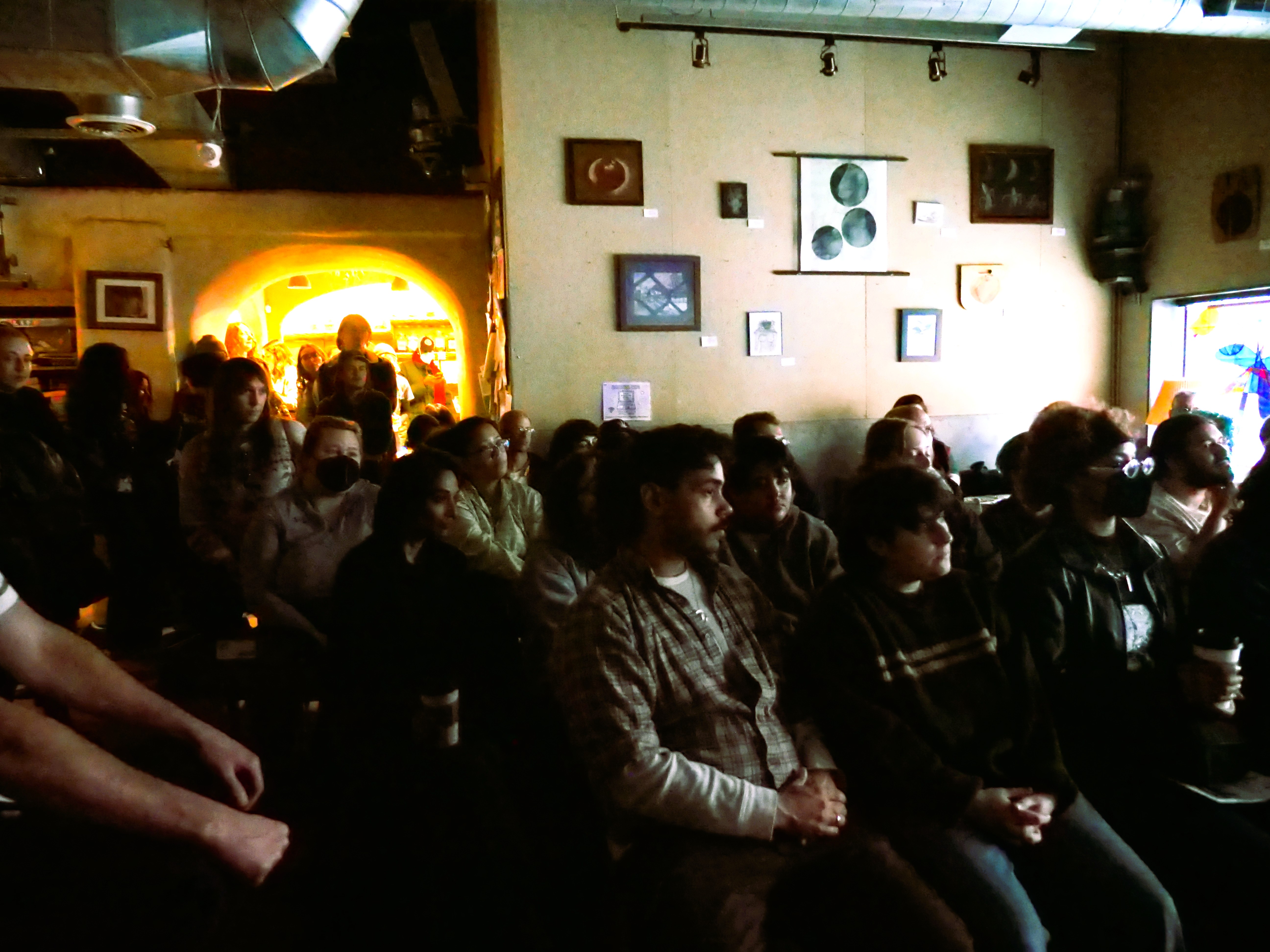
Moments before a Pakistani-brokered, two-week ceasefire was announced, dozens gathered at Bantha Tea Bar on Penn Avenue in Garfield to raise money for essential supplies for families displaced by Israeli and American military actions in Iran and Lebanon.
Sponsored in part by Pitt Divest from Apartheid, the fundraiser supported the purchase of food, blankets, medicine, baby formula, hygiene products, and other necessities that organizers said would be delivered through aid groups working in the region.
Inside the viewing room, rows of chairs, printed materials, and a spread of Iranian and Lebanese dishes set the stage for a two-film program. The first, directed by Jocelyn Swaab and titled “Beirut, My City," documented the human cost of the 1982 Israeli siege of Beirut. The second, directed by University of Pittsburgh Film Studies professor Azadeh Ahmadi and titled “Esfahan, the Third Day," was a meditation on love and loss through the lens of Iranian feminism.
Professor Ahmadi later commented on the film in an interview, “Ultimately, ‘Esfahan, The Third Day’ is my love letter to the Zayanderud River, which dried up 20 years ago due to human activity. It devastates me that I never got to go back to visit it before it dried up. To me, the river symbolizes many things, mainly the death of my friend in Iran, who died by suicide shortly after coming out as gay. It also represents the progressive erasure of womanhood from Iranian life, as well as everything else we lost as a generation.”
After the screenings, organizers reported that the three-hour fundraiser had collected $1,000 in online donations, not counting cash donations at the door.
“It’s important to make people aware of the human cost of the bombings,” said a guest speaker, who gave their name as Kimiya. “My family members in Iran are suffering. My grandmother has developed severe insomnia due to constant fear and danger. My brother has broken out in stress-induced hives all over his body. We can’t send text messages to Iran right now; communication is very limited. I’m worried, but I am also very grateful for everyone here supporting us, and I’m grateful for Bantha Tea Bar for hosting us tonight.”
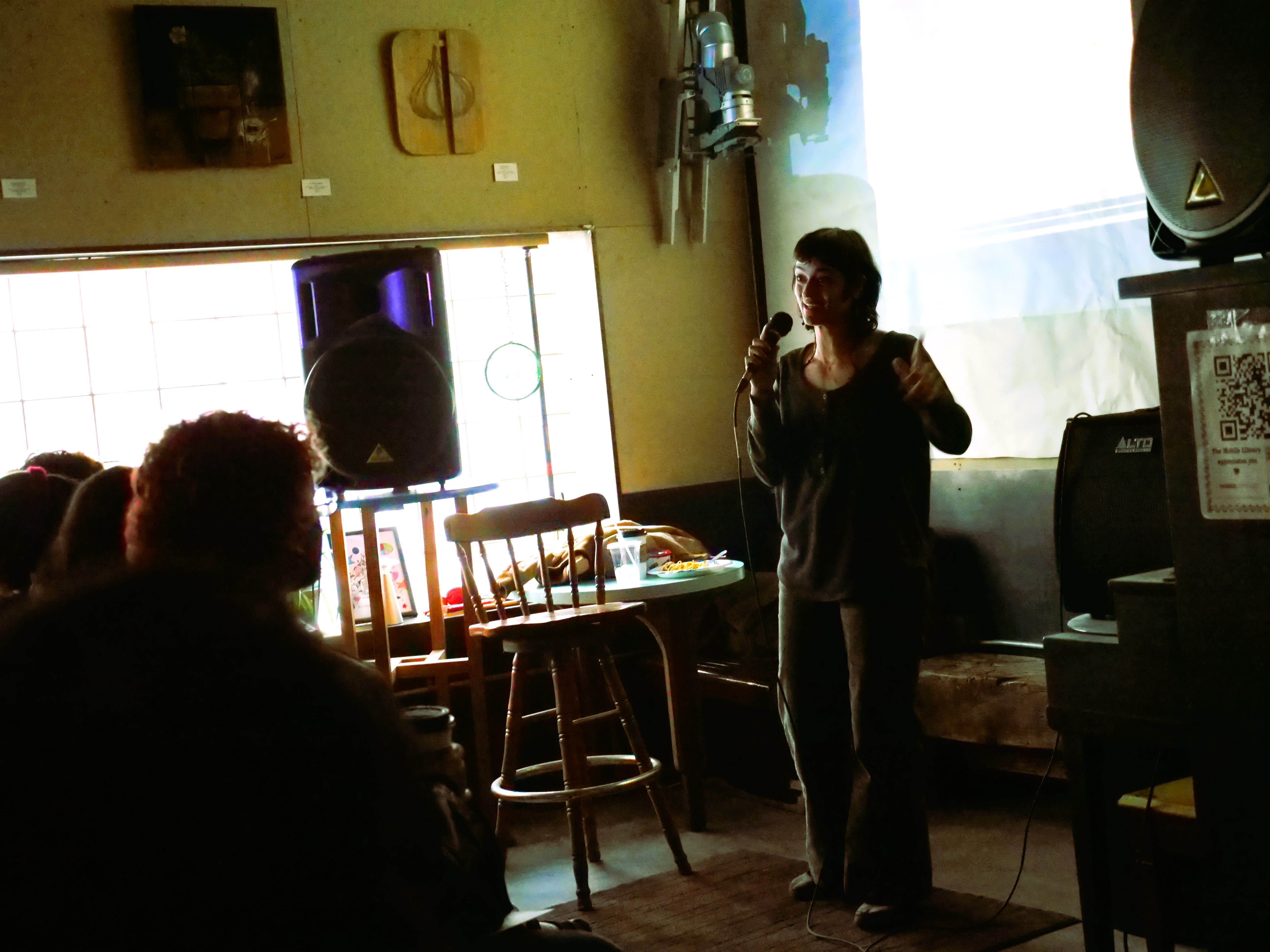
This is not the first time Bantha Tea Bar has offered its large, compartmentalized, two-room space for community outreach charities, activism, and other mutual aid efforts, and it has become a go-to place for like-minded organizers to connect. In their own words, the team behind Bantha ‘aims to engage with the local community by offering a hand-built safe space for meetings, philosophizing, gathering, activism, and art,’ whether they’re hosting clothing drives for the homeless, free books, poetry readings, live music, writers’ clubs, or the occasional karaoke night.
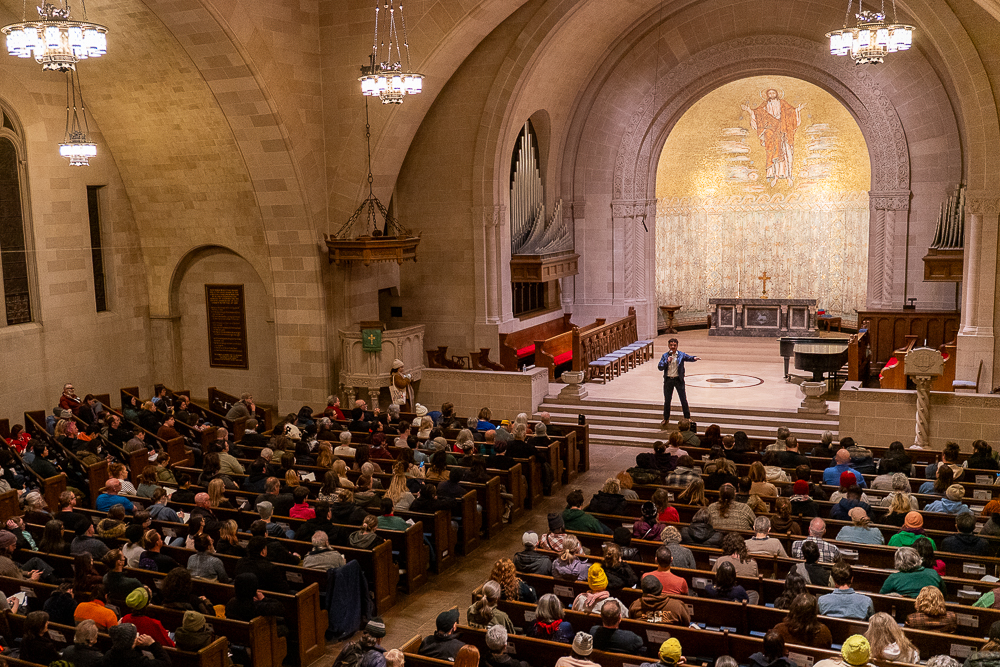
The April 7 fundraiser unfolded as an emotional evening, shifting rapidly between lively chatter, applause, tears, somber reflection, and collective resolve as diplomacy played out amid President Trump's looming threat to destroy "a whole civilization." Community activists passionately shared their experiences with Iranian and Lebanese identity while issuing calls to action for the audience.
“This is resistance,” said one young adult activist, who gave their name as Darya. “Every war is a war on the poor. Every war is a war on children. These donations could mean the difference between life and death for someone in Iran or Lebanon. I have family members who have lost their homes. They tell me everything is going to be okay, but I can feel the fear in their voices.”
The mid-March Israeli invasion and subsequent evacuation orders for southern Lebanon has already displaced over 1 million people, as Israeli and American officials dispute whether Lebanon is included in the current ceasefire, as Pakistani Prime Minister Shehbaz Sharif claimed when he first announced the truce Tuesday. On Wednesday, Israel killed over 300 people in massive airstrikes across Lebanon.